

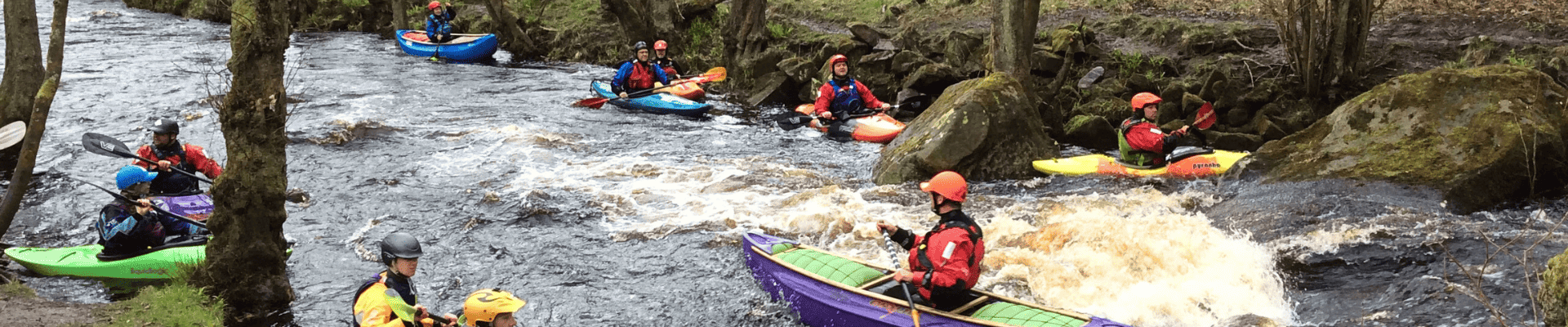
Washburn Update
Hosted by Robin Hood Watersports, Paddle UK presented an update to clubs from across the region on the current status of the River Washburn and its future as a paddling venue. An update for those members who couldnt be there in person.
Ben Seal opened with a recap of the long road to where things stand today. A combination of legislative changes, ecological requirements, capital works across the reservoir chain, and several years of difficult weather all contributed to the gradual reduction and eventual cessation of events, leaving the Washburn without a release for approximately six years despite sustained efforts from Paddle UK throughout.
Following the last meeting, Paddle UK wrote to both the Yorkshire Water Chief Executive and the local MP, and secured meetings in December and February. Both were notably more positive than previous exchanges, with Yorkshire Water expressing a genuine willingness to explore a return to events built around their twice-yearly mandatory scour valve tests in May and October.
However, new regulations introduced in January 2026, the Water Industry Regulation of Incidents (WIRI), have added a further complication. The sediment disturbance created when scour valves are opened is now classified as a pollution event, carrying significant fines, and several water companies have already been affected. This has led to an unusual situation where Yorkshire Water are now asking Paddle UK to help demonstrate to the Environment Agency that scour valve releases are not genuinely harmful. An imminent scour valve test will be observed by Environment Agency representatives, and a positive outcome would remove a significant regulatory barrier.
Expectations around what a return to events might look like need to be managed carefully. Releases would initially be built around the two scheduled test dates per year, and even that cannot be guaranteed. The road back to anything resembling the Washburn of old is a long one, though the tone from Yorkshire Water is more constructive than it has been for some time.
The woodyard site has deteriorated significantly over six years without use. Tree works, structural concerns with one of the outbuildings, general maintenance, and damage to the boundary wall following an incident earlier this year combine to an estimated remediation cost of well over £50,000. In light of this, Paddle UK’s board has asked that the option of selling the land be explored. An immediate neighbour has expressed interest, with access for paddling events to be preserved through a legally secured covenant as part of any agreement. Any proceeds would be reinvested into the sport with a focus on the Yorkshire region. The discussion on this point was wide-ranging, with members raising legitimate questions about valuation, guarantees, and use of funds, all of which were taken on board.
Other topics included the possibility of accessing gauge data to allow informal paddling during natural overtopping events, concerns about reliability and water quality at Tees Barrage, and the broader shortage of whitewater opportunity in the region. Ben also highlighted two significant legislative opportunities: a Water Bill expected in the King’s Speech on 13 May, and a forthcoming government green paper on access to nature which, for the first time, is expected to include a commitment to consult on access to unregulated inland waterways.
Coming out of the meeting, Paddle UK committed to monitoring the outcome of the scour valve test, progressing independent valuations of the woodyard, initiating a feasibility study into paddling access across the Yorkshire region, and prioritising engagement with Tees Barrage. A further update will be arranged, likely in a hybrid format.